

Beas Manufacturing for Automotive Component Suppliers
Ship to the OEM schedule, with the traceability to prove it.
Tier-2 and Tier-3 suppliers live between two pressures: OEM schedules that change every week, and audits that expect every part traced to its steel heat. SAP Business One runs your orders, stock and invoicing. Beas adds the plant layer: APS schedules built on real resource capacity, quality control with inspection plans, and times, quantities and scrap reported at a terminal instead of in a register.
This page is for
- Typical plant
- Machining, forging, sheet metal, die-casting or moulding units supplying OEMs and Tier-1s
- Clusters
- Pune–Chakan, Chennai–Sriperumbudur, Hosur, Gurugram–Manesar, Aurangabad
- Customers
- Two-wheeler, passenger car, commercial vehicle and tractor OEMs, and Tier-1 suppliers
- Already running
- SAP Business One for sales, purchase, stock and finance
Close-up of trays of freshly machined auto components (steering knuckles, gear blanks or brackets) with a printed lot tag showing a barcode and heat number. Shallow depth of field, CNC machine blurred behind. A real Indian plant and real parts, with permission.
2100 × 900 px · WebP · auto-components-lot-tag.webp
Three challenges every auto supplier knows
-
01Challenge 01 · Quality and audits
Traceability the OEM demands
On the floor today
The steel heat number is on the mill test certificate. Once bars are cut, turned and heat-treated, the link lives in registers and the memory of the stores in-charge.
When an OEM raises a field complaint, the quality team spends a day or more working out which heat went into which lot and which dispatch. Customer audits find the gaps.
How Beas addresses it
- Raw material is received in SAP B1 with the heat number recorded as its batch.
- Material issued to Beas work orders and assemblies received from them post as SAP B1 inventory transactions against their batch numbers; Beas can check each new batch number for uniqueness.
- QC-inspection plans on the item and on routing operations create QC orders at purchase goods receipt, during production and at assembly receipt; goods wait in a QC warehouse until released, with four-eyes principle and electronic signature if required. Quality control
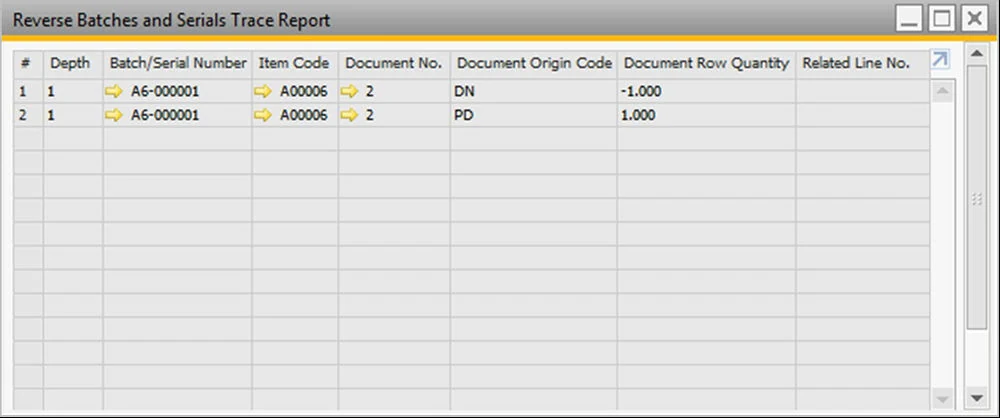
- Beas links every transaction on a batch or serial number to it, including quality and production documents, and its batches and serial numbers tracking report retrieves them. SAP Business One's Forward and Reverse Batches and Serials Trace Report adds the trace to customers and suppliers. With Produmex WMS, picking for production runs through the warehouse.
What you measure
Trace timeFrom complaint to the list of affected lots and dispatches: minutes, not days.
Rejection PPMRejected parts per million, by part and by machine.
-
02Challenge 02 · Delivery and planning
Dates promised against real machine, tool and labour limits
On the floor today
OEM schedules change every week. The planner rebuilds an Excel plan each morning, while fixtures and tools are shared across machines and operators move between shifts.
Sales promises the standard lead time regardless of load. The gap shows up as Sunday overtime, express freight and line-stoppage debits from the OEM.
How Beas addresses it
- Routing positions hold the resource, Setup time and Mach+Labor Time/unit for every operation of every part number. Production planning
- Critical CNCs, presses and moulding machines have “Consider resource limits” switched on, so APS does not dispatch them above 100% of their shift schedule (Beas APS licence).
- Alternative resources are defined on each routing position with their own times, and automatic optimisation lets APS select a more adequate one (APS licence). Automatic optimisation
- Capacity changes are entered as resource calendar exceptions with a reason, maintenance plans come from the Maintenance module (BEAS_MTC), and tool requirements are entered on the routing in Tool Administration. Resource calendar and maintenance
What you measure
OTIF to OEMDeliveries on time and in full against OEM schedule lines.
OEE by machineAvailability, performance and quality, worked out from the times and quantities reported at terminals.
-
03Challenge 03 · Shop floor
Shop-floor status still on paper
On the floor today
Job cards and production registers are filled in at the end of the shift and typed into the system the next day, if at all.
Rejections are under-reported, OEE is an estimate, and nobody knows a part's real cost until the month is closed.
How Beas addresses it
- Operators log on at a terminal next to the machine with their personnel card number and report start, interruption and completion of each operation. Factory data capture
- Finished goods and scrap quantities are reported as they happen (Terminal Production Data Collection licence).
- Supervisors see the status of every work order and resource, including delays and material shortages, in the Production Cockpit (Beas 2025.06+). Production Cockpit
- Post-calculation per work order compares accrued with planned cost, marginal and full, so actual cost per part number is known. Post-calculation
What you measure
Margin per part numberActual cost per work order against the OEM price, part by part.
Data-entry hours savedRegisters and next-day typing removed from every shift.
From OEM schedule to traced dispatch
-
Schedule received
OEM schedule lines are held as sales orders in SAP Business One. -
Material planned
The MRP Wizard turns schedule lines, forecasts and stock into production and purchase recommendations. -
Machines loaded
Beas APS dispatches work order operations to CNCs and presses within their resource limits. -
Floor reports
Operators report operations, quantities and scrap at terminals; QC orders record inspection results. -
Released dispatch
Batches released from the QC warehouse are delivered, and the batch tracking reports link them back to the heat number.
Four numbers an auto supplier runs on
-
OTIF to OEM
On-time, in-full deliveries against schedule lines, by customer and part number.
Sales orders + deliveries -
OEE by machine
Availability, performance and quality per machine and shift, from terminal reports.
Terminal reports -
Rejection PPM
Rejections per million by part and machine, from scrap reports and QC orders.
Scrap reports + QC orders -
Margin per part
Actual cost per work order against the OEM price, from post-calculation.
Post-calculation
The misBoost mobile dashboard showing OTIF to OEM and OEE by machine for the week, inside a phone frame. Demo figures only; crop the phone status bar.
1200 × 900 px · WebP · misboost-otif-oee-mobile.webp
- EDI call-offs: direct EDI with OEM portals is not something we promise out of the box. Schedule lines are held in SAP Business One; integration with a specific OEM's portal is assessed case by case.
- Licensing: resource limits, calculation types and automatic optimisation need the Beas APS licence, and the Gantt chart the APS Gantt Viewer licence. Terminals need the Terminal Production Data Collection and, for QC, Terminal Quality Control licences; maintenance plans need the Maintenance licence. We confirm licensing with you before the demo.
- Traceability: batch tracing combines the Beas batches and serial numbers tracking report with the standard SAP Business One trace report. We show both on your parts in the demo database.
- IATF 16949: Beas QC orders, release with four-eyes principle and electronic signature, and terminal reports give auditors system records. Certification remains your quality system's responsibility.
Send us four things, see your own parts in Beas
- 3 part numbersEach with a two-operation routing, for example turning and milling.
- 2 machines with their toolsThe machines those parts run on, and the tools or fixtures they share.
- 1 OEM customerWith a few weeks of schedule lines.
- 1 QC-inspection planThe checks you run today, for one of the three parts.
Read the feature guides
- Beas 01 Production Planning APS scheduling within resource limits.
- Beas 13 Factory Data Capture Times, quantities and scrap reported at the terminal.
- Beas 17 Quality Control QC-inspection plans, QC orders and release.
- Beas 21 Post-Calculation Actual against planned cost per work order.
- Beas 03 Automatic Optimisation APS selects a more adequate alternative resource.
- Scenario An Indian auto supplier Illustrative before-and-after on the Production Planning page.
Keep the OEM's business on data, not effort
In a BPAS gap review we look at your SAP B1 data, your shop-floor records and your OEM scorecards, and show you which of the three challenges is costing you most today.